
What went right in 2025: the top 25 good news stories of the year
The 2025 good news roundup
Nature and environment
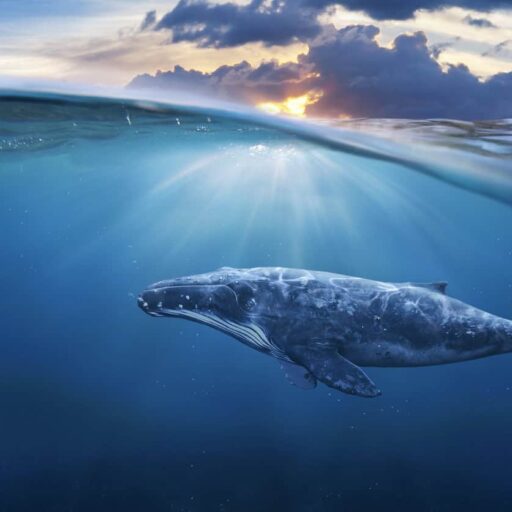
1. Ocean treaty ‘a landmark victory’ for high seas
A landmark deal to protect the high seas finally became a reality in September, bringing hope for marine ecosystems and the people who rely on them.
A total of 79 nations have now ratified the Global Ocean Treaty – way beyond the 60 required for it to become law. Iceland, Brazil and Japan joined the list in December; Australia, the UK and US are among the heel draggers.
The treaty will enter into force in 2026, giving governments a legal framework to protect waters that lie outside of national boundaries. Currently, only 1% of international waters are protected. Greenpeace said the treaty could establish the largest network of ocean sanctuaries in history.
“This is the most significant victory for ocean protection and restoration I have ever witnessed,” said the charity’s Ariana Densham.
Image: James Teohart
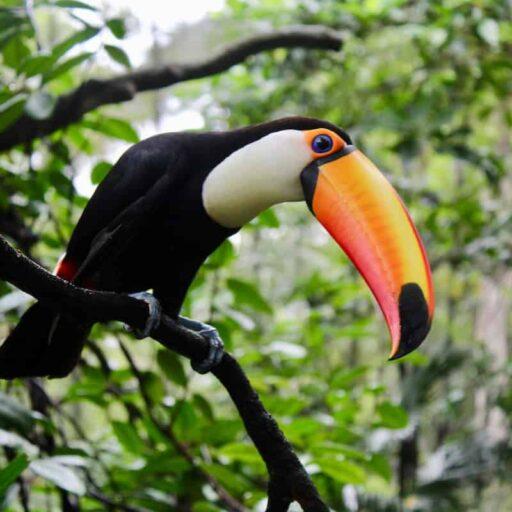
2. Cop16 deal a ‘step forward’ for nature protection
Despite the tumultuous geopolitical landscape, nations agreed in March to mobilise at least $200bn (£155bn) per year by 2030 to help developing countries conserve biodiversity.
The commitment was hammered out in Rome, Italy, at the Cop16 biodiversity conference. Agreed by the 196 states that signed up to the Convention on Biological Diversity (including Russia, but excluding the US), the deal was hailed a win for multilateralism in uncertain times.
“Negotiators from all countries … put their differences aside to forge a common path forward,” said Lin Li, senior director for global policy at WWF International. “What’s left now is an urgent need to mobilise funding … to ensure we reach the $200bn a year committed by 2030.”
Despite the progress, many countries wanted to see greater ambition to halt and reverse biodiversity loss by 2030 – a target that looks likely to be missed.
Image: Carmel Arquelau
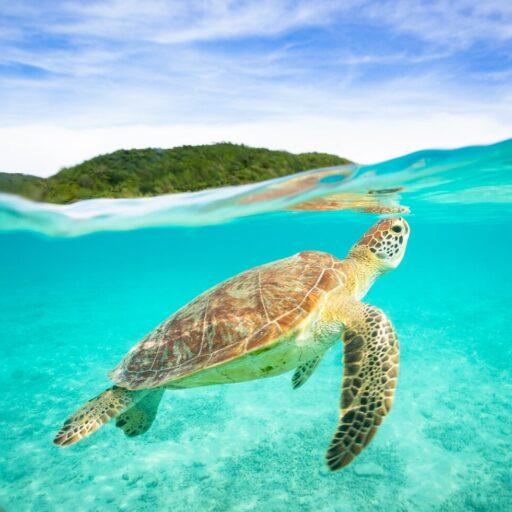
3. Some species came back from the brink
Halting biodiversity loss remains one of the planet’s most critical challenges. The good news is that, done properly, conservation works – as 2025 frequently reminded us.
Dozens of species proved that extinction is not inevitable. In a feat that once seemed improbable, the green turtle came off the ‘endangered’ list following a decades-long mission to save the species.
In May, a kingfisher native to Guam laid eggs outdoors for the first time in almost four decades thanks to a breeding programme. A “singing” insect was also brought back from the brink in England, while the brown trout returned to cleaned-up Swedish rivers previously despoiled by industry.
Meanwhile, the crane staged a “remarkable” comeback in Scotland, having been hunted to extinction there. The recovery of 150 on-the-brink species in neighbouring England was also hailed a conservation success story.
In other welcome developments, the long-lost sailback houndshark was recorded again off Papua New Guinea, jaguar numbers surged in Mexico, and chinook salmon were spotted swimming in the Chiloquin Basin in Oregon, US, for the first time in 100 years.
Image: Richard Eaton
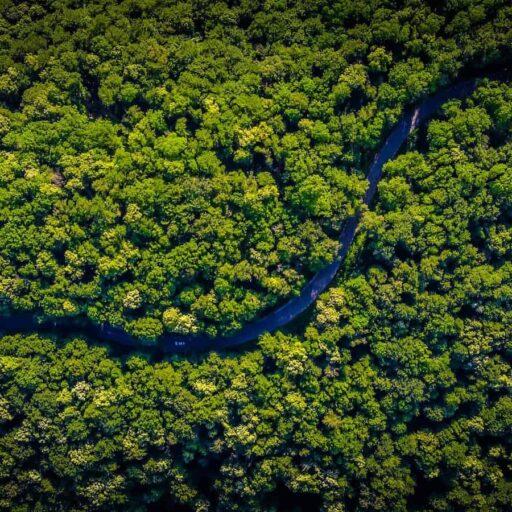
4. Slowing deforestation rate ‘a hopeful trend’
Deforestation has slowed in every region of the world over the past decade, according to a report published by the UN Food and Agriculture Organization (FAO) in October.
Describing the findings as “a hopeful trend”, the FAO also noted that more than half of forests are now covered by long-term management plans, while one fifth are within legally established protected areas.
The FAO said that the world had lost 10.9m hectares of forest annually in the last decade – down significantly on the 13.6m hectares lost per year in the previous 10 years, and the 17.6m hectares lost in the decade before that.
However, despite the hopeful findings, the FAO warned that the world is still losing far too much forest.
Image: Vlad Hilitanu

5. Vast new wildlife sanctuaries were created
More habitats were designated protected areas in 2025, offering a lifeline to koalas, whales and other species.
Australia, Colombia, Greece, Portugal, and São Tomé and Príncipe were among the nations announcing new marine reserves. Six such sites were approved by Spain alone, while French Polynesia established the world’s largest marine protected area.
The Australian government, meanwhile, pledged to protect an “extraordinary and unique” marine ecosystem off the country’s west coast. The 26,000sq km Exmouth Gulf is home to Australia’s largest concentration of dugongs and is a vital stop-off point for humpback whales.
Australia also set the boundaries for its Great Koala national park, which at 4,600sq km will be the largest protected area in the state of New South Wales.
Nations have agreed to protect 30% of the planet by 2030. While progress is being made, the world is off track to meet that target.